Béla Tarr and Ágnes Hranitzky’s “Werckmeister Harmonies” follows János Valuska, a newspaper delivery man who witnesses his town descend into chaos and rebellion following the arrival of a mysterious circus. The main attraction of the spectacle features a gigantic taxidermy whale and a guest appearance by the mysterious ‘Prince’. Since its release, the film’s most iconic image of a whale in the middle of a square has invited countless interpretations by film critics, theorists, and academics. Most of these interpretations have explored the political, religious and ideological themes within the film, but in doing so, they have fallen victim to “anthropomorphism, or the projection of human values and meanings onto animals, plants and inanimate objects.” (Cahill, 2013, 74) The aim of this essay is to look at “Werckmeister Harmonies” through a “creaturely” lens, in hope of presenting an alternative analysis that explores the relationship between humans and nonhumans and their vulnerability in relation to the cosmos and time.
In the film’s opening scene, we see the fire in a stove being put out by the owner of a pub. This sudden switch from light to darkness foreshadows the solar eclipse re-enactment that is to follow. As the owner of the establishment invites people to leave, one of them insists, “Just wait a bit for Valuska to show us.” Shortly afterwards, János Valuska arrives and everyone starts making room for his performance. János takes off his coat, and grabs a few drunk customers and uses them to represent celestial bodies. The man in the middle plays the Sun, another plays the role of the Earth spinning around the Sun, and a third customer mimics the Moon’s rotation. What follows is a cosmic-like dance between the drunkards re-enacting the movements of the solar system during an eclipse. Within the frame, man is placed quite literally and figuratively at the centre of the universe, which visually displays a very direct anthropocentric worldview reflecting humanity’s “narcissistic desire to recognize one’s reflection everywhere and in everything” (Cahill, 2013, 74) The fact that the “human planets” are played by stumbling drunkards suggests that regarding humankind as the central element of existence is foolish.
When János vividly describes the dramatic turn of events that occur during this natural phenomenon, the sole focus is on the animal kingdom. “The dogs howl, rabbits hunch down, the deer run in panic, run, stampede in fright.” He then explains that “in this awful incomprehensible dusk, even the birds too are confused and go to roost. And then complete silence. Everything that lives is still.” Later on in his monologue he unifies humans and nonhumans by referring to both as a single unit. “Will Heaven fall upon us? Will the Earth open under us? We don’t know.” The shared confusion of humans and nonhumans during this celestial event serve as a reminder of how we are all at the mercy of nature. In “Gravity and Grace”, Simone Weil wrote that “the vulnerability of precious things is beautiful because vulnerability is a mark of existence.” (Weil, 2012, 108) The sudden fear instilled upon the viewer, the animals, and the human beings during that precise moment perfectly encapsulates this beautiful vulnerability of all living beings.
An eclipse represents the passage of time; it marks an end and a new beginning. Throughout the film, Tarr and Hranitzky capture the in-betweenness of life by staying with the characters instead of cutting away or disrupting the flow of time. Following the bar performance, we see János walking alone in the street at night. The camera tracks back and eventually the now small figure at the centre of the screen is enveloped by darkness. This mirrors a latter scene when we see János walking away from the camera towards the brightness of the sun. According to David Bordwell, Tarr builds his films “out of conversational blocks, punctuated by undramatic routines.” (Bordwell, 2007) An example of the mundane routine of János is him walking home after a visit to the bar, and putting Uncle Eszter to bed. This sequence ends with another eclipse-like moment where we witness the shadow of a huge truck overtaking the light reflected on the house fronts. These long takes linking the mundane with the eventful results in a long-take aesthetic reflecting the rhythm of everyday life. The average shot length in “Werckmeister Harmonies” clocks in at three minutes and forty-eight seconds (Bordwell, 2007). By rejecting a ‘cut’, the film forces us to feel trapped in time. In “The Cinema of Béla Tarr: The Circle Closes”, András Kovács argues that Tarr uses “circular narrative structure and extreme narrative slowness” to express the “human situation represented as a trap from which there is no escape” (Kovács, 2013, 5) However, this take neglects to acknowledge the nonhuman presence at the heart of Tarr’s work. In “Critical Terms for Animal Studies”, Anat Pick criticizes the notion of “art as an expression of ‘the human condition’” and refers to the idiom as a desperate attempt “to shore up the human as a unique ontology” (Pick, 2018, 414) In fact, animals are “at the center of Béla Tarr’s most difficult films” (Pfeifer, 2013). The vulnerability of the cat in “Sátántangó”, the horse in “The Turin Horse”, and the whale in “Werckmeister Harmonies” invite viewers to look beyond our tendency for a humanistic focus on cinema.
The whale doesn’t have much screen time in “Werckmeister Harmonies”, yet its presence looms over the entire film. The film’s lengthy duration and natural progression even resembles the mysterious creature; “Werckmsieter Harmonies” is long and moves forward slowly yet gracefully. From the moment the whale arrives, the townspeople question what this means for them. As János goes to pick up the newspapers, he is greeted by Uncle Béla and his wife. She asks him “How are things at the cosmos.” To which he replies, “Everything’s fine.” The irony is that he delivers the news in this town yet, he is completely oblivious to what is actually happening around him. In literature, János would paradoxically be referred to as a “wise fool” for they hold wisdom, yet fail to illuminate the significance of everything happening around them. (Walter, 2005, 515-520) In that same sequence, we see János sitting on the left side of the screen folding newspapers, when the camera slowly tracks in to the woman in the background as she complains about various aspects about the state of things. The camera movement signifies the importance of what she is saying. She mentions families disappearing out of nowhere, and complains about the cold weather and how there is no coal to keep them warm. During this “conversational block”, she mentions the arrival of the “horrible great whale” and the three-eyes prince, which is a very different description compared to the circus advertisement on lamp posts (Fantastic: The World’s Largest Giant Whale! And Other Wonders of Nature! Guest Star: The Prince). These opposing views and images of the whale is further touched upon in another scene where another local, Uncle Karcsi, talks about the rumours swirling around town. “Some say there are at least three hundred of them, someone else that there’s only two of them actually, and that the whole attraction is the most frightening thing that you would ever see.” It is hinted upon that the whale could be like a Trojan horse, or not. He talks about how people are saying the whale has no part in it, while others fear it is the cause of it all. These juxtaposing views signify uncertainty, which disrupts the order of things and leads to chaos.
When we finally do see the whale through the eyes of János, the camera follows our protagonist at eye level. We occasionally linger on the faces of the townspeople who stand motionless around the whale. There is a moment of cinematic spontaneity of birds flying above the townspeople. As people stand silently waiting, we hear the flapping and fluttering of wings; signifying the flocking of humans and nonhumans to the square. Eventually János buys a ticket and studies the whale within the darkness of the truck. His gaze is that of wonder reflecting the sentiments of the circus advertisement. He tells a fellow bystander, “Nothing wrong with it. Just see what a gigantic animal the Lord can create.” His fascination with the creature is very cosmological. When wildlife photographer Bryant Austin known for taking close-up photographs of the eyes of whales described an eye-to-eye encounter with a sperm whale, he writes, “I noticed his eye moving along the length of my body before returning to meet my gaze.” He writes that it made him re-evaluate his “perceptions of intelligence, conscious life on this planet” (Austin, 2013). In his essay, “One of Us”, John Jeremiah Sullivan writes that “accepting that no two consciousness can ever have transparency, or at any rate can never have certainty about it, leaves us on some level cosmically alone. (Sullivan, 2013) The difference between these cosmic fascinations of the whale, is that János is looking at an unconscious whale, while Austin and Sullivan are referring to encounters with conscious whales. When János mentions that nothing is wrong with the whale, he fails to see its unnatural condition, or even recognize the horrors it endured. He sees the whale for what it represents and not for what it is, an animal dragged out of its natural habitat rotting and decomposing in the middle of a square. When writing about taxidermy, Donna Haraway wrote “the animal is frozen in a moment of supreme life, and man is transfixed.” (Haraway, 1989, 30) The whale’s representation evokes feelings of wonder, when in reality it reflects an anthropogenic vision of extinction and the unethical human disruption of creaturely harmony in their natural habitats.
Even though “the capturing of the animals was a symbolic representation of the conquest of all distant and exotic lands.” (Berger, 21), when the circus arrives, the town loses control and descends into complete chaos. The scene in the square mirrors the one in the hospital later on in the film. Only this time, everything is reversed establishing a connection between human and nonhuman atrocities. The camera follows the mindless mob looting and destroying everyone and everything in their path till the camera lands on the image of an old weak man standing in his bathtub. They instantly stop what they are doing, and withdraw from the scene. It’s almost like they come face to face with the fragility of their existence. The appearance of the skeletal gaunt man also brings to mind “the image of a concentration camp victim”. (Rosen, 2016) In other words, a time when masses acted without consciousness. While the conscious (humans) are surrounding the unconscious (whale) in the square, the unconscious (mindless mob) is surrounding the conscious (frail man) in the hospital. Human and nonhuman vulnerability to historic atrocities caused by outsiders is at the centre of the two most memorable sequences of “Werckmeister Harmonies”.
Perhaps this is what the musicologist, Uncle Gyorgy, refers to when he talks about how Andreas Werskmeister commercialized a system of harmonies through the tuning of instruments, which ultimately clashed with the music of the celestial spheres, or the natural harmonies of the world. Throughout his speech, the camera rotates around him, the same way it rotated around János during the cosmic bar dance between the planets. Through cinematic means, a clear link is established between the eclipse sequence and the Werckmsieter speech. The same can be said about the sequences of János witnessing the whale in the square, and János witnessing the mob in the hospital; János finally wakes up to the ugly reality of the world. Our disconnection with nature and the separation between humans and nonhumans has disturbed the natural harmony of the cosmos. There is one shot that perfectly encapsulates the possible harmony that could exist between humans and their environment. We see the camera fixed on a close-up of János and his uncle as they walk from one block to another. The sequence drags on for some time, but gradually the sounds of their footsteps merges with the sound of leaves and the gushing winds. At this moment, the sound design creates a beautiful rhythmic harmony, as man becomes one with the natural elements. The human and his nonhuman environment get intertwined, or as Dai Vaughan would say, “man, no longer the self-presenter, has become equal with the leaves”. (Dai Vaughan, 65)
By studying the relationship between the human and nonhuman, chaos and order, light and darkness, “Werckmeister Harmonies” presents itself as a cosmic vision of creaturely vulnerability to the inescapable atrocities that come with time. The film ends with the destruction of the town, and our protagonist mad in a hospital. Yet, the final image of Uncle Gyorgy revisiting the whale, now stripped of all its wonder, gives off the sense that the truth of the world has finally been laid bare. But in the final moments, a fog envelops the square, the town, Uncle Gyorgy and the whale. Both the human and nonhuman are overtaken by a natural phenomenon. The uncertainty of what time holds for both still looms in the air.
Bibliography
Cahill, J.L., (2013) Anthropomorphism and Its Vicissitudes in Pick, A., Narraway, G., Screening Nature: Cinema beyond the Human (1st ed.). Berghahn Books.
Weil, Simone. (2012). Gravity and Grace. Abingdon, Oxon: Routledge.
Kaiser, Walter (2005). “Wisdom of the Fool.” New Dictionary of the History of Ideas. Horowitz, Maryanne Cline, 1945-. [New York?]: Charles Scribner’s Sons. pp. Vol. 4, 515–520.
Austin, B. (2013). Beautiful Whale. Harry N. Abrams.
Sullivan, J. (2013). One of Us. Lapham’s Quarterly.
Haraway, D. 1989, “Teddy Bear Patriarchy in the Garden of Eden, New York City, 1908–1936”, Primate Visions: Gender, Race, and Nature in the World of Modern Science, Routledge, London.
Berger, J. (1980) Why Look at Animals?, About Looking, New York: Pantheon, pp. 1-28.
Rosen, A. (2016, May 5). The Importance of Béla Tarr’s ‘Werckmeister Harmonies.’ Tablet. Morton Landowne
Vaughan, D. (1999). Let There Be Lumière. In For Documentary Twelve Essays (First Edition). University of California Press.
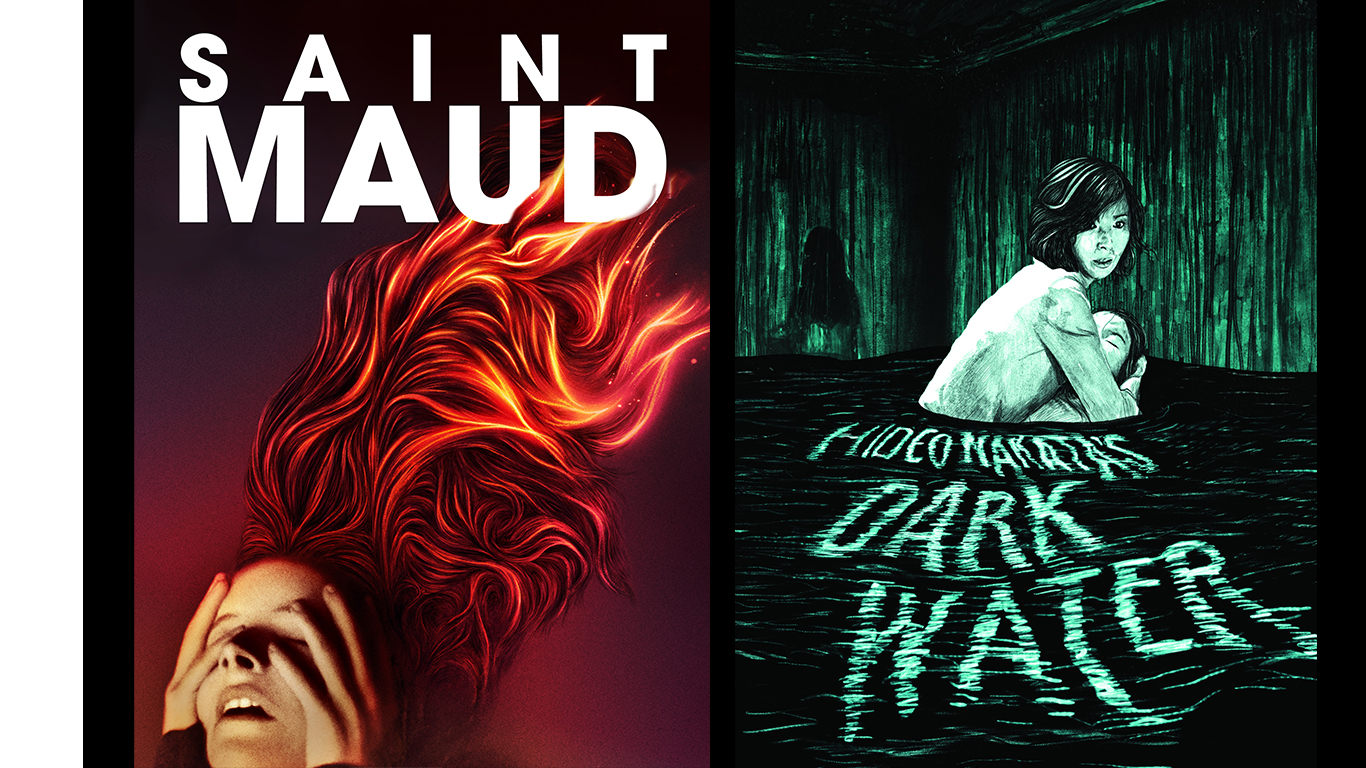
Women’s mental health is the main focus of both Hideo Nakata’s Dark Water (2002) and Rose Glass’ Saint Maud (2019), two of the most unsettling horror films of the 21st century. In both films, the spectator is left wondering if any of the disturbing supernatural occurrences experienced by the two protagonists are in fact real, or figments of their imagination. Are they indeed sane or completely mad? This has been the subject of many initial responses and academic writings on both films. In her review for Sight and Sound, Ela Bittencourt wrote, “Saint Maud skillfully blurs the line between a possible medical condition and outright madness” (Bittencourt, 2020, p.80). While Sarah Arnold pointed out that in Dark Water, the mother’s “history of ‘madness’ and her all too obvious reliance on medication” affects the way the spectator identifies and interprets her behaviour (Arnold, 2013, p. 127).
However, the more engaging question is not whether they are indeed mad, but how this manifested madness is depicted on screen, how the spectator shares the physical and emotional journey they embark on, and what this shared experience says about society as a whole. “Women were believed to be more vulnerable to insanity than men, to experience it in specifically feminine ways, and to be differently affected by it in the conduct of their lives.” (Schneider, 2001, p. 14). This essay aims to examine the delicate ways in which both films capture the female experience, as well as their vulnerability to ‘madness’ in today’s world. However, in order to do so, one needs to first take a phenomenological approach to analyzing Dark Water and Saint Maud.
Vivian Sobchack wrote that “contemporary film theory has not taken bodily being at the movies very seriously–and, at best, it has generally not known how to respond to and describe how it is that movies ‘move’ and ‘touch’ us bodily, how they provoke in us ‘carnal thoughts’ before they provoke us to conscious analysis” (Sobchack, 2015). By breaking down the sensory experience of Yoshimi Matsubara (Hitomi Juroki) in Dark Water and Maud (Morfydd Clark) in Saint Maud, one can not only access their psychological and bodily state of being, but understand the ramifications of the outside world on their internal selves. After all, the spectator does not see the world objectively through the eyes of the filmmakers, we see it through the eyes of the protagonists. During the most pivotal moments in Dark Water and Saint Maud, the filmmakers merely project the detected light and reverberated sounds received by the warped perception of our lonely protagonists. By allowing the visual and sensuous imagery to envelop us, we are forced to slip into the soaking wet pumps and the piercing nail-filled shoes of our protagonists.
Through the phenomenology of film, “‘the cases to be managed’ and ‘problems to be solved’, take the lead in defining support and generating knowledge about madness” (Russo, 2016, p. 60). This essay will start with analyses of the hinted upon troubled pasts of Maud and Matsubara, and how their traumas resurface in various forms throughout the films. I will then inspect the textures of the physical worlds surrounding them, and how water and fire are used to activate and instigate emotional responses. Finally, the essay will explain how this all relates to the ethics of care, particularly child care and end-of-life care. In Towards a Feminist Theory of Caring, Joan Tronto and Berenice Fisher wrote about the importance of care in our lives and how it consists of “everything that we do to maintain, continue, and repair our ‘world’ so that we can live in it as well as possible” (Tronto, 1990). This essay will look at how both films showcase the handling, or mishandling, of care between various characters, as well as how scorching loneliness and the dreadful feeling of abandonment are directly related to gendered madness. Ultimately, both Dark Water and Saint Maud are stark reminders of how the exclusion, neglect, and gendered oppression of women within society and the medical community have dire consequences on the way we perceive, treat, and care for mental health.
A great opening scene usually sets the stage and introduces the main characters of a film, but when done right, it gives viewers a good indication of what the film’s themes will be about. In that respect, Saint Maud and Dark Water waste no time in plunging us straight into the traumatic experiences of the protagonists’ troubled pasts. In a tight close-up shot, the camera glides down on a strand of hair before finally landing on a pool of blood. The film then cuts to another close-up, the main protagonist, Maud. Her face is covered in blood, her dark pupils looking out into the distance, fixed in a frozen stare of complete utter shock. We cut to her point of view, a slightly upwards angled wide shot of a dead patient dangling from a hospital bed. With each cut within the first three shots, the viewer creeps closer to our protagonist, till the spectator quite literally slips into her mind with a POV shot. Maud is now sitting in the corner, she looks up and, we see a cockroach on the ceiling.
The scene fades to black and we see the bold capital letters of the title filling the screen, “SAINT MAUD”. The white title transitions into a red boiling pot of tomato soup. We see and hear the thick red bubbly liquid forming and inevitably bursting into splashes. The direct experience of this affective imagery perfectly encapsulates the uneasiness of watching Maud throughout the film. The spectator knows that her trauma is constantly boiling beneath the surface, waiting to explode at any given moment. When Saint Maud switches from past to present, or vice versa, the colour imagery changes as well. In one shocking moment later on in the film, a dark green palette instantly thrusts viewers back to that traumatic incident. During a sex scene, Maud’s hands are placed on a man’s chest. Suddenly, the colour palette changes from warm yellow to dark green. Maud is now performing chest compression on a patient. Back in the present we hear the guy breathing heavily during sex, the sound of him breathing takes us back to a fleeting moment of her patient gasping for air. The film uses colour and sound as emotional triggers to her trauma. She’s now performing CPR in the present time and his chest collapses. Maud screams, and we cut back to the three opening shots of the film. The man takes advantage of her disoriented and confused state of mind, and proceeds to rape her despite her pleas for him to stop. This anxiety inducing switch from past to present, yellow to green, is extremely unsettling and distressing. According to Dr. Debra Kaminer, two indicators of PTSD is when the traumatic event is persistently re-experienced through “recurring and intrusive distressing recollections of the event, including images, thoughts or perceptions” as well as suddenly “reliving the experience, illusions, hallucinations, and dissociative flashback episodes” (Kaminer, 2010, p.30). In Saint Maud, post-traumatic stress disorder is not told, it is felt.
Similarly, colour and sound are strategically used in the opening sequence of Dark Water to represent flashbacks from the past. “Colour provides an external expression of Yoshimi’s inner turmoil” (Balmain, 2014, p.139) Only here, brownish-yellow represents the past. The first image we see in the film is that of a young Yoshimi, waiting to be picked up by her parents at school. The sound of pouring rain floods the soundscape. The camera pulls back and we see an isolated Yoshimi looking at all the other kids getting picked up by their parents. A teacher walks in and asks, “Yoshimi, no one’s come for you?” The camera moves closer to the young girl, as the sound of rain grows louder. The film cuts to the present, revealing a much older Yoshimi looking outside another window as it rains outside, the sound of rain “creating continuity between distinct temporal spaces” (Balmain, 2014, p.139). In other words, the heavy rain becomes “a motivator for the flashback” (Arnold, 2013, p. 129).
Much has been written about the representation of rain and water in Dark Water. For example, Nina K. Martin writes that the growing water stain in her apartment symbolizes Yoshimi’s mental deterioration, and that “water serves as a conduit for paranormal activity, elevating the natural to the supernatural” (Martin, 2008). However, looking at the way water works in the film cinematically through the lens of mental health reveals so much about the visualization of emotional states. Water transports the spectator to a specific emotion, a specific image of the past. Its constant recurrence could very well be an intrusive present-day recollection of that traumatic event from the past, or perhaps a collective trauma of all women; this trauma representing the cycle of neglect within society. In both Saint Maud and Dark Water, image and sound are used to trigger our memory and “‘move’ and ‘touch’ us bodily” (Sobchack, 2015). Through the specificity of the filmic medium, the spectator experiences sensations from the past. By playing with the visual and aural sensory of perception, the spectator almost instantly flips from one emotional and psychological state to another. This extends even to the phenomenal space surrounding our both Maud and Yoshimi.
Writing about the female body experience, Iris Marion Young wrote that “feminine existence lives space as enclosed or confining, as having a dual structure, and the woman experiences herself as positioned in space”. In her essay, she points to a famous study by Erik Erikson in which male and females were to construct a setting, and typically females would construct indoor scenes, while men created outdoor settings. (Young, 1990, p. 39). Since both Dark Water and Saint Maud are very much concerned with the female experience of madness within society, it makes perfect sense that both films are predominantly set within claustrophobic indoor settings. For Maud and Yoshimi, the walls surrounding them seem to be closing in on them, dialing up their frustration with the situations they have been dealt.
After Maud gets fired from her job, she feels completely abandoned, not just by society, but by God. We hear the sound of drums as she walks down a boardwalk. We see flickering neon lights all around her. She tries to make eye contact with a man sitting across from her in a bar. After a brief sexual encounter in the bathroom, he leaves in a hurry. She looks to her left and notices a group of friends chatting and laughing. The camera cuts to a reaction shot of her smiling awkwardly before releasing a forced disruptive laugh. The group of friends briefly glance at her in confusion and ignore her. These moments are almost as painful to watch as any of the film’s more violence scenes. Maud, completely separated from others, begins to feel the relentless feeling of loneliness enveloping her world.
The following scene is of Maud on a phone uncharacteristically reaching out to Joy in a bathroom stall. The expressionistic shot is framed to empathize the narrowness of the bathroom, the overwhelming walls on both her sides make her seem completely separated from the reality of the outside world. Joy turns her down, and we see Maud running her finger against the wall. There is a wall between her and everyone else, both literally and figuratively. The phenomenology of that cammed up space allows the spectator to experience what it feels like to be completely rejected and alone. As soon as she walks back into the bar, the sound of drums and distant chatter fades away. An ominous soundtrack kicks in and the viewer is forced to experience the world through her eyes. We see a woman crunching loudly on chips, drunkards taking shots of liquor, a random malevolent laughter is heard in the background, a creepy old man gives her the looks. As Virginia Woolf once said while describing the cinematic experience, “the eye licks it all up instantaneously, and the brain, agreeably titillated, settles down to watch things happening without bestirring itself to think” (Woolf, 1926). Like a psychophysiological response to repulsive sights and sudden sounds, the spectator shares her irritated responses to her surroundings. Maud looks at her pint of beer, and sees a cyclone suddenly forming out of nowhere. Her isolation is spiraling her mind out control.
In Dark Water, the emotional turmoil of being a single parent in a patriarchal society is what affects Yoshimi’s supposedly unstable state of mind. As the threat of losing her child grows more imminent, and the more her ex-husband gaslights her by exploiting her history of mental health, the walls around her begin to deteriorate uncontrollably. The flooding water penetrating the walls, and the heavy rain constantly pouring down outside of her home, makes the spectator share this dreadful feeling of being trapped. The space surrounding our protagonist reflects her emotional disposition. Because of the hidden traps of a male-driven world, with all the heavy demands and expectations that come with it, Yoshimi is “thereby both culturally and socially denied the subjectivity, autonomy, and creativity that are definitive of being human” (Young, 1990, p. 31). Yoshimi is expected to pull off the impossible- to maintain her sanity while fighting off a lawsuit against her husband, as well as embarking on search for a good paying job, taking care of her only child, and dealing with an apartment that is falling apart. As if this wasn’t enough to trigger a mental breakdown, but on top of all that, a ghost is literally haunting her from the past as well.
However, the real horror in Dark Water has nothing to do with the ghost, and everything to do with losing one’s own parent or child. External forces, such as the socioeconomics of dealing with a divorce, fighting for custody, and the impossibility of maintaining full-time employment, fuel the spectator and Yoshimi’s shared fear of an inevitable separation. Due to the destructive tides of the patriarchy, mother and child can’t help but drift apart. The demands of single-parent motherhood are designed to work against the mother. Sarah Arnold perfectly describes the historic link between single-parent motherhood and madness in cinema when she wrote that “female characters who act outside of their socio-ideological roles are often figured as abnormal, monstrous or mad” (Arnold, 2013, p.131). And in this case, this ‘madness’ is used by male-figures to feed into “a cycle of parental abandonment” (Balanzategui, 2013, p. 7).
Parental neglect is portrayed as a problem that has been passed down from one generation to another causing separation related traumas. Dark Water “reinforces the hopeless repetition involved across the lives of three females, often collapsing the boundaries between them, as we witness repeated scenes of the three characters being left behind by their parents as young children” (Balanzategui, 2013, p. 7). The most significant moment in Dark Water that exemplifies how this inescapable negligence takes a toll on both the mother and child, comes in a montage that not only cuts between two locations, but two time periods. Ikuko waits for her mother at school, while Yoshimi waits to be interviewed at work. The film cuts back and forth between both mother and child. Yoshimi explains her situation to the interviewer, while Ikuko watches the other kids getting picked up by their parents. As she’s waiting for her employer to continue the interview, she picks up her phone. The film cuts to the past, a young Yoshimi is at school waiting alone as well. The teacher leans in and tells her, “Today, daddy is going to get you. So just a little bit longer, ok?” The flashback prompts her to hurry out of work, but Ikuko has already been picked up by her dad. As Yoshimi takes her hand, Ikuko holds back for a second, briefly standing her ground like she’s hesitant of going back with her mother.
It’s an incredibly subtle yet powerful moment in the film. Barbara Creed wrote that “one of the key figures of abjection is the mother who becomes an abject at that moment when the child rejects her for the father who represents symbolic order”. (Creed, 2009, p. 72) This brief moment in Dark Water perfectly encapsulates this abjection, only it’s done within the context of a cycle of single-mothers being oppressed within the patriarchy. Yoshimi is reliving her past, only this time, she’s the mother. One can’t help but wonder whether after experiencing this very specific type of rejection, Yoshimi realizes, understands, and perhaps even forgives her mother for just being human in a society where everything is horribly skewed against you. After all, healing only comes when we accept, process and evaluate the thoughts and feelings from our past.
In Saint Maud, the dynamic of care between characters is quite different. Maud’s actual job is to care for Amanda, a patient who is dying from cancer. However, we soon learn that Maud is quite delusional and unstable, having blind faith in God, and truly believing that her actual purpose in life is to save Amanda from her sinful life. The irony of this dynamic is that Maud is the one providing the care, when she is the one in need of actual care, mental health care. In one pivotal scene, after Amanda expresses that she does not want to be alone, Maud sits next to her before bedtime. Maud tells Amanda that when God came everything changed for her. To which Amanda replies, “so this is a recent conversion?”. Maud nods in agreement, and says, “Sometimes he talks.”
This might be the first time that Maud reveals her delusional state of mind to anyone, but Amanda does not clock her insanity. As with most end-of-life care patients, it’s quite common to wonder what awaits at the other side of death. “Will there be anyone else there? And then what? Nothing?” Amanda wonders if her consciousness will evaporate into eternal oblivion after her physical experience in life terminates. At this vulnerable moment, Maud quickly leans in and assures her that everything will be fine, because God sees her. Amanda smiles at Maud, grabs her hand and crowns her with the title, “my little saviour”, not knowing that this very statement will feed into her desperate delusional need for salvation from her past sins. This notion is re-instilled when Maud receives an illustrated William Blake book with a note that reads: “For Amanda, my saviour”. Many of the visuals from that book get manifested visually, or mentally, throughout the film. Much like Yohsimi’s initial mental health problem was triggered by the disturbing images she was exposed to while working as a translator for graphic novels in Dark Water.
However, one could argue that both Maud and Yoshimi become vulnerable to ‘madness’ because of the pressures of fulfilling certain roles and responsibilities that patriarchal societies expect them to excel at. Yayo Okano writes that “the ethics of care tries to bring our attention to social and political impoverishment, where women’s work is exploited and therefore women are alienated from themselves as well as from social connections” (Okano, 2016, p. 90). Yoshimi and Maud are overworked women trying their best to meet the heavy demands that come with caring for others. When either of them shows the slightest signs of struggle to maintain these responsibilities of care, their whole life falls into jeopardy. Yoshimi is always one mistake away from losing her child, and Maud constantly in threat of losing her job. Without the child or the job, suddenly life becomes meaningless. They both struggle to find purpose, which plunges them into depressive states of loneliness and isolation. While talking to ‘God’, Maud expresses in frustration, “I was ready and open and alive, and this is my reward- unemployable, unoccupied”. And after Ikuko almost drowns in the bathtub, Yoshimi, who is visibly disappointment in herself, cries: “I’ll never leave you alone again.”-a promise that she eventually is forced to break in order to protect her from harm’s way.
In an interview for Sight and Sound, Morfydd Clark talks about the toll that this type of work can take on someone’s mental health, “I’m really interested in the cost of care for people doing it. It’s a huge tragedy that Maud’s suffering has come from trying to care for people” (Williams, 2020, p. 28). Similarly, Yoshimi suffers in order to provide care and protection for her own child. This is only propelled by the historical patriarchal constraints of the male-oriented society in Japan. According to Alana Semuels, “there is no such thing, legally, as joint custody in Japan, and women there tend to be the ones financially responsible for their children”, which is even more difficult to pull off, since most single-parent Japanese women dropped out of work to raise the children. So, when the time comes to take care and provide for their children independently, they find themselves working at entry-level low-paying jobs (Semuels, 2017). The real issue extends beyond the issue of ‘gendered madness’, because if anything, the male-oriented system is what is truly maddening in every sense of the word.
At the end of Dark Water and Saint Maud both our protagonists have a final showdown before surrendering to the supernatural happenings surrounding them. Maud returns to Amanda’s house towards the later stages of her dealing with illness. Amanda is weaker, drained, and nearing her end. After apologizing to Maud for treating her badly the other day, she tells Maud, “You must be the loneliest girl I’ve ever seen”. Maud then proceeds to use her fingers to spread holy water on Amanda’s face, but she won’t have any of it. “Snap out of it honey. He isn’t real. You must know that.” The whole sequence is shot in close-ups; the warm lighting resembling and befitting hell. Amanda delivers the final blow to Maud’s delusion “I hate to be the one to break it to you, but it’s just you and me here. Nothing you do matters.” The film cuts to a close-up of Maud painfully breaking down in silence. It’s at that moment, she realizes her past sins won’t be redeemed. Maud sees Amanda turning into a demonic figure. The spectator is now reliving the emergence of her madness with her. “You came back here, because you’re alone. If you were a true believer that would be enough, but it’s clear now you’re as weak as your faith.” Maud only defense mechanism against the painful truth being delivered is to repress it, or shut it down. In other words, kill the messenger.
In his response to Philiippe Ariès’ The Hour of Our Death, James P. Carse wrote that, “if our focus shifts from the moment of death itself to the responses to death, large conceptual difficulties quickly overtake us” (Carse, 1982, p. 399). Maud’s response to death is ultimately a search for redemption and company. She turns to religion and imagines the presence of an orgasm inducing God, out of fear of accepting the reality that she killed someone, which isolated her from society and in return fueled her sexual frustration. Her recent conversion to religion has absolutely nothing to do with real faith. The second time Maud kills, her delusional mind turns her into some kind of avenging angel out of denial. Maud’s only way to live with her past sins is by giving it false meaning, turning sins into good deeds. At the end, she fulfils a self-imposed purpose. Maud walks to the beach holding a lighter and a bottle filled with gasoline. We see a closeup of Maud’s face being covered in gasoline, the imagery is reminiscent of people getting baptized, only the liquid isn’t purifying, it’s highly flammable. There’s a moment of complete calm before she lights the fire. Everyone falls to their knees, and Maud ascends to the heavens, but the haunting last shot crashes the spectator back to reality. Maud is screaming in agony while burning in ‘hell on earth’.
While Maud willingly ends her life in flames, Yoshimi finds herself drenched in water in an elevator towards the end of Dark Water. Yoshimi’s death is sacrificial. She tells a tearful Ikuko to stay away as the ghost of Mitsuko grabs on to her. Mitsuko’s grip loosens, the second Yoshimi tells her that she’s her mother. The scene cuts to closeups of Yoshimi and Ikuko looking at one another through the glass of the elevator door, before Yoshimi rises to the afterlife (the seventh floor). Ikuko cries for her mother while chasing her through the stairs. When the elevator doors open, a flood of water comes pouring out. It feels almost like a release, like the collective traumas of past abandonments has finally been quenched. The film then picks up ten years later. A grown up Ikuko revisits their old apartment, and finds out that her mother chose to become a mother to someone else in order to protect her own daughter. Yoshimi had been watching over her real daughter all along. In other words, Ikuko learns that “care is equated with self-sacrifice” (Raghuram, 2021, p. 614).
In both Saint Maud and Dark Water, women are faced with sacrificial choices. Yoshimi has to choose between her job or her child. She ends up sacrificing her own life for the protection of her daughter. Initially her act is perceived as parental neglect, but it quickly becomes clear that this very neglect comes from fear of not being able to provide care and protection in the patriarchal world they live in. Maud sacrifices herself to God, believing herself to be an angel sent from heaven to care for others. But the pain they both feel stems from the same source- abandonment and loneliness. When Maud sacrifices her life, the distant sound of bystanders calling on others to stop this madness gets no response whatsoever. In fact, throughout the film, the red flags of her behaviour are completely ignored by everyone around her. In a chapter titled, Madness and the Rights of Women, Elaine Showalter stresses that feminist psychology of women, in particular the mother-daughter relation, and the development of the feminist therapy movement “are essential to the future understanding of women, madness, and culture, and to the development of a psychiatric theory and practice that by empowering women, offers a real possibility of change” (Showalter, 1985, p. 250). Dark City and Saint Maud are stark reminders of how women have been neglected by society and the medical community.
The fundamental principle of care is helping, assisting, and being of service to others in order to improve their situation in life, not just physically or mentally, but universally. Caring “affects every aspect of our lives and is not limited to situations of illness” (Gilligan, 2013, p. 95). When it comes to the realms of nursing, mothering, or receiving mental health care, there is a clear gap of knowledge due to the dominance of one gender over the other in most fields of study. The most accessible way to bring light to these harmful issues affecting society as a whole is through cinema. More than any other artform, film allows us to engage the senses so we can directly experience the phenomenon of the human condition. Pulitzer Prize winning film critic, Roger Ebert, once famously proclaimed that films “are like a machine that generates empathy. If it’s a great movie, it lets you understand a little bit more about what it’s like to be a different gender, a different race, a different age, a different economic class, a different nationality, a different profession, different hopes, aspirations, dreams and fears” (Ebert, 2018) Engaging with the phenomenology of space and time in films like Dark Water and Saint Maud, not only brings to light the implications of neglect on women and their vulnerability to gendered madness in today’s world, but the need to fundamentally reconsider the way we treat and care for others.
Bibliography
Arnold, S. (2013) “Motherhood in Recent Japanese and Us Horror Films,” in Maternal horror film: Melodrama and motherhood. Basingstoke: Palgrave Macmillan, pp. 126–137.
Gilligan, C. (2013). “Caring for a sick person: account of a real experience “ in Ethics of Care. Monographs of the Víctor Grífols i Lucas Foundation. p.98
Kaminer, D. (2010) “Chapter 3 POSTTRAUMATIC STRESS DISORDER AND OTHER TRAUMA SYNDROMES,” in Traumatic stress in South Africa. Johannesburg: Wits University Press, pp. 28–59.
Okano, Y. (2016) “Why has the ethics of care become an issue of global concern?,” International Journal of Japanese Sociology, 25(1), pp. 85–99. Available at: https://doi.org/10.1111/ijjs.12048.
Raghuram, P. (2021) “Race and feminist care ethics: Intersectionality as method,” The Changing Ethos of Human Rights, pp. 66–92. Available at: https://doi.org/10.4337/9781839108433.00009.
Russo, J. (2016) “Towards our own framework, or reclaiming madness part two,” in Searching for a rose garden: Challenging psychiatry, fostering mad studies. Monmouth: PCCS Books, p. 59-67.
Schneider, S.J. (2001) “Barbara, Julia, Carol, Myra, and Nell: diagnosing female madness in British horror cinema,” in British Horror Cinema. 1st Edition. Routledge, p. 14.
Showalter, E. (1985) “Madness and the Rights of Women,” in The female malady: Women, madness, and Engl. culture, 1830-1980. New York: Pantheon Books, pp. 248–250.
Sobchack, V. (2015) “What my fingers knew. the cinesthetic subject, or vision in the flesh,” Expanded Senses, pp. 279–313. Available at: https://doi.org/10.1515/9783839433621-027.
Tronto, J.C., & Fisher, B.M. (1990). Toward a Feminist Theory of Caring. In Circles of Care:
Work and Identity in Women’s Lives, State University of New York Press
Williams, M. (2020) ‘The Gospel of Rose Glass’, in Sight & Sound, November 2020, pp. 26-30.
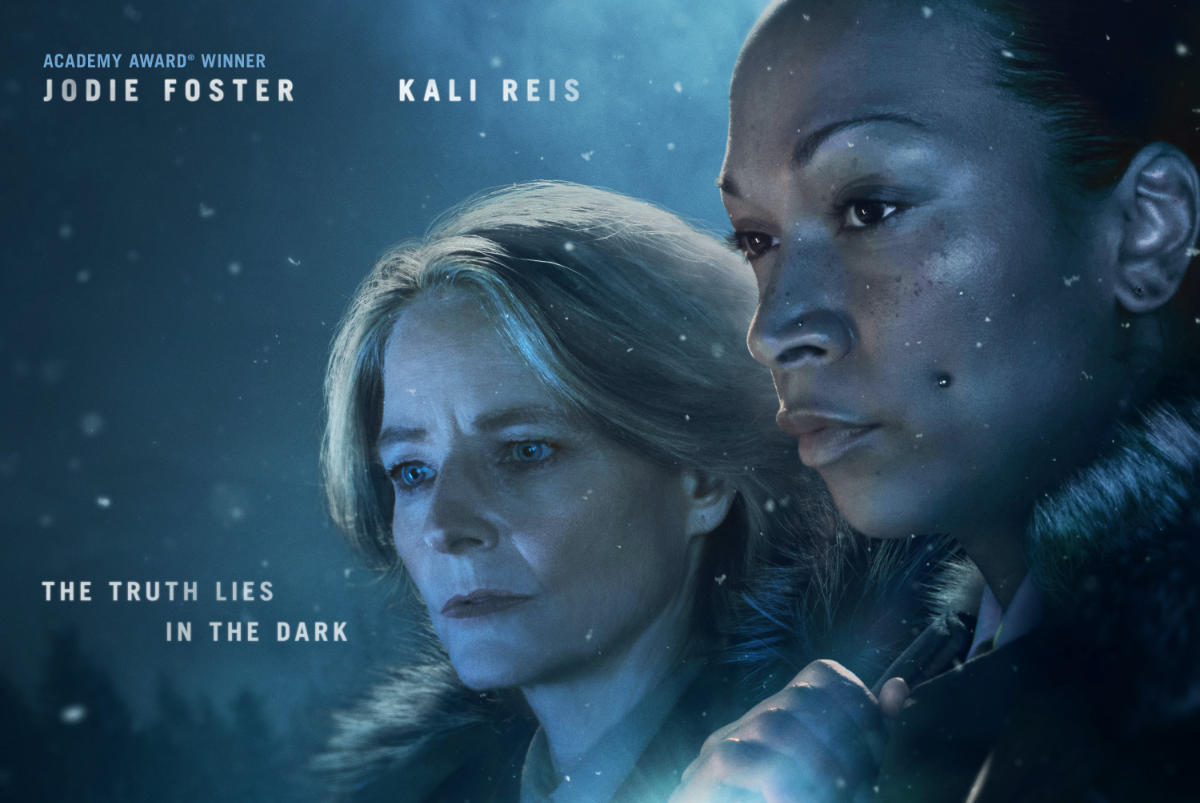
Early on in the fourth season of “True Detective” titled “Night Country”, viewers with an eye for detail will spot an old VHS tape of John Carpenter’s “The Thing” carefully placed on a shelf in one of the indoor scenes. Everything from the cold harsh arctic setting, to the plot revolving around an investigation of bodies frozen in a state of fear pays tribute to the Carpenter classic. But while “The Thing” falls more under cosmic sci-fi horror, this season is more of a supernatural thriller with cosmic horror elements in it. Issa Lopez’s chilling take on the series is unquestionable the scariest season of “True Detective” yet.
On December 17th, a resident of a fictional Alaskan town called Ennis discovers seven naked scientists buried deep in ice. One of them appears to have clawed their eyeballs out, another has bitten off their own flesh, while the rest appear to be screaming in complete utter terror, as if frozen in fear for the rest of eternity. One of the strongpoints of this season is that it follows in the footsteps of the first season by having one show-maker write and direct all six episodes. This complete creative control over the material maintains the tone of impending doom throughout the season. Having experimented with horror herself with her debut, “Tigers Are Not Afraid”, Lopez manages to keep viewers hooked from the get go. However, it’s around the third episode that viewers won’t be able to turn away from the dreadful horror unfolding before their eyes.
With “The Silence of the Lambs” under her belt, and now this, I believe no one can portray an investigative detective better than Jodie Foster. She commands the screen and acts circles around her co-stars (which says a lot given that the whole cast delivers terrific turns). Unlike the smart yet reclusive Clarice Starling, the character Foster plays in “Night Country” is the polar opposite of that persona. Liz is bad-tempered, grouchy, yet sharp and witty. Her partner, Evangeline Navarro, played by Kali Reis is more in tune with her spiritual side and believes there’s more to this case than meets the eye. She believes in the realm of the unknown, and that something beyond our rational understanding of reality is taking place. In true “True Detective” fashion, both characters can’t stand one another, yet they agree to put their differences aside to solve an otherworldly case of murder.
Any doubts you might have about the new ‘horror’ direction the show embarks on will quickly be dispelled by the first episode of “Night Country”. Foster, Reis, and López collaborate to create a chilling thriller that blends elements of the supernatural with the mundane in a town where secrets seem to be hidden in every corner of the enveloping darkness surrounding the townspeople. As the season progresses along, this cold darkness gradually seeps into the lives of the townspeople in Ennis, Alaska. Like the first season, “Night Country” excels in making the location a character in itself. The town of Ennis becomes a crucible for the unexplained.
Florian Hoffmeister’s cinematography in “Night Country” stands out as a visual feast, with the frigid landscapes mirroring the characters’ internal struggles. The icy landscape becomes an ominous backdrop, enhancing the pervasive sense of dread that permeates the entire season. The filmmakers utilize this frozen setting not only as a milieu of isolation, but also as a symbolic representation of the characters’ entrapment in an unfolding cosmic nightmare.
Following a couple of questionable seasons, it is refreshing to see True Detective being handled by capable hands unafraid of taking the material into new uncharted territory. Although “Night Country” doesn’t delve into bleak philosophical matters as intricately as the first season, it still resonates by exposing us to the darkest qualities of humanity. This shadowy world harbours horrors beyond comprehension. However, as the characters confront these unspeakable horrors, they begin to gain a deeper understanding of their own traumas and personalities. The filmmakers behind “True Detective: Night Country” never quite reach the heights of the first season, but then again who ever does. This instalment strikes a balance between the familiar and the new, delivering a profound reflection on the complexity of the human condition. It is in fact, must-see horror television.
“True Detective: Night Country” starts airing January 14th on HBO Max.
Delightfully upbeat, suspenseful, and full of charm, Omar Hilal’s “Voy! Voy! Voy!” is a feel-good crowd-pleaser with a sly undercurrent of social commentary. Egypt’s official submission for ‘Best International Feature Film’ at this year’s Academy Awards tackles one of the most fascinating true stories in recent memory. The film revolves around Hassan, a security guard who dreams of escaping the hustle and bustle of Egypt to live abroad. When he learns about a blind football team possibly qualifying for the World Cup, he does the inconceivable. In one last desperate effort to execute a great escape, Hassan fakes it till he makes it. By that, of course, I mean, he pretends to be visually-impaired to join the team and leave the country once and for all.
It takes an all-encompassing director who fully immerses himself in the story he’s telling to be able to pull off what Omar Hilal did. To get moviegoers to sympathize, let alone to cheer, for a despicable character who does not merit one ounce of compassion is the film’s most impressive feat. A lot of credit has to be given to a staggering performance by Mohamed Farag, whose acting is as agile as his surprising footwork. Bayoumi Fouad as Captain Adel and Nelly Karim as the investigative reporter, Engy, feel intrinsically connected to their characters, but it is the nuanced turn by Hanan Youssef as his mother that truly deserves praise. Whenever she’s on screen, she effortlessly captivates our attention.
Hilal, who also produced and wrote the film, gives character development just as much attention as the calculated beats that move the plot forward. As Hassan navigates the challenge of not blowing his own cover, he begins to develop newfound feelings for Engy. The irony of this tale is that even though Hassan has perfect eye-sight, he’s completely blind to the blessings surrounding him. And as he goes through his journey, the metaphorically blind man begins to see. It is thoughtful nuance such as this underlying symbolism that propels the film beyond slapstick entertainment into the realm of meaningful drama.
Part comedy and part sports drama, “Voy! Voy! Voy!” refuses to be boxed into one genre, but at its heart, it’s a crime caper that follows in the footsteps of the great con-artist films of the past, films like George Roy Hill’s “The Sting” and Steven Spielberg’s “Catch Me If You Can”. In fact, the film plays homage to the latter in a beautiful Saul Bass-inspired title sequence at the very beginning. That said, “Voy! Voy! Voy!” carves its own path and gets the ball rolling forward in its own pace. What makes it so enjoyable to sit through is its unpredictability. At times, it feels like Hilal is playfully dribbling with audience’s expectations before throwing viewers a curveball out of nowhere.
In one beautifully edited montage early on in the film, Hassan and his two best friends meet up with migrant smugglers. As a sketchy smuggler provides absurd instructions of the escape plan, the film cuts to snippets envisioning Hassan within that journey. It involves hiding in a tomato truck, getting sprinkled with coffee, and meeting a pirate called Sharhabil to avoid detection, but it’s the witty back and forth dialogue between the characters in that scene that really amps up the humour. One of the film’s strongpoints is its portrayal of scenes that would normally be extremely hard to watch in a very light-hearted manner. This is precisely what makes the film so Egyptian; it perfectly encapsulates how historically Egyptians have always dealt with hardship through humour. Not only that, but when they’re faced with a problem, Egyptians come up with the most creative, and in this case outrageous, solutions.
As of late, Egyptian cinema has suffered greatly from an onslaught of action-packed propaganda films, but during the past few years, a new generation of filmmakers have emerged to breathe life into the landscape of Egyptian cinema. New filmmakers making the switch from advertising to film, such as Omar Hilal and his contemporaries, are making the rounds at international film festivals, often snagging the most prestigious awards in their respective categories. “Voy! Voy! Voy!” doesn’t deviate much from mainstream commercial cinema, but it doesn’t really need to. It follows a distinct formula that delivers the goods without sacrificing depth and meaning.
It explores complex ethical dilemmas where characters must make difficult moral choices. Tackling a theme as convoluted as the ethical implications of illegal immigration is no easy task, but the film knows better not to take a stand for or against it. Instead, it chooses to explore the characters and the motivation behind their actions and choices. If it passes any judgment, it’s on the characters themselves and how they can possibly stoop so low, as opposed to the idea of immigration as a whole. As the narrative unfolds, viewers are confronted with the harsh realities faced by individuals navigating a world fraught with moral ambiguity. The film skilfully avoids reducing the complexities of illegal immigration to mere black-and-white perspectives, opting instead to present a nuanced portrayal that encourages audiences to question their own preconceptions. Through shameful characters, the movie challenges viewers to reflect on the intricate interplay of socio-economic factors, personal motivations, and the consequences of choices in a morally complex landscape.
I do wonder if some of the humour would get lost in translation, but there’s something extremely universal about the film that transcends linguistic barriers. The universal appeal lies in its ability to tap into fundamental aspects of the human experience, be it love, friendship, or the absurdities of everyday life. Clocking in at two hours, I must admit, the film does a fairly good job of giving each character his due, especially with a star-studded ensemble as big as this one. That said, some of the choices made by one character in particular, Captain Adel, may feel slightly rushed. Towards the end of the film, the reasoning behind his actions felt a bit hurried and his character transformation could have benefitted from some minor additional runtime. Still, it is important to acknowledge the delicate balance the filmmakers must strike in accommodating numerous plotlines within its runtime.
“Voy! Voy! Voy!” is the type of film you stumble upon on TV in a few decades, and remark “you know what they really don’t make them like they used to”. But don’t wait that long to discover this Egyptian gem. In fact, I would recommend seeing this film with an audience. After all, there’s a unique joy in sharing the absurdness of this plot with a crowd, where the collective response amplifies the humour and creates an infectious energy. In a world increasingly dominated by individual screens, the experience of witnessing a dramedy like “Voy! Voy! Voy!” in a bustling theatre rekindles the magic of shared laughter and serves as a reminder that some cinematic pleasures are best enjoyed in the company of a lively audience. Roger Ebert used to say that when we go to the movies, and the film really works, we momentarily forget about the outside world. In that respect, “Voy! Voy! Voy!” was quite the great escape, both literally and figuratively.
“Voy! Voy! Voy!” will screen at select theatres in New York and Los Angeles starting December 1st.
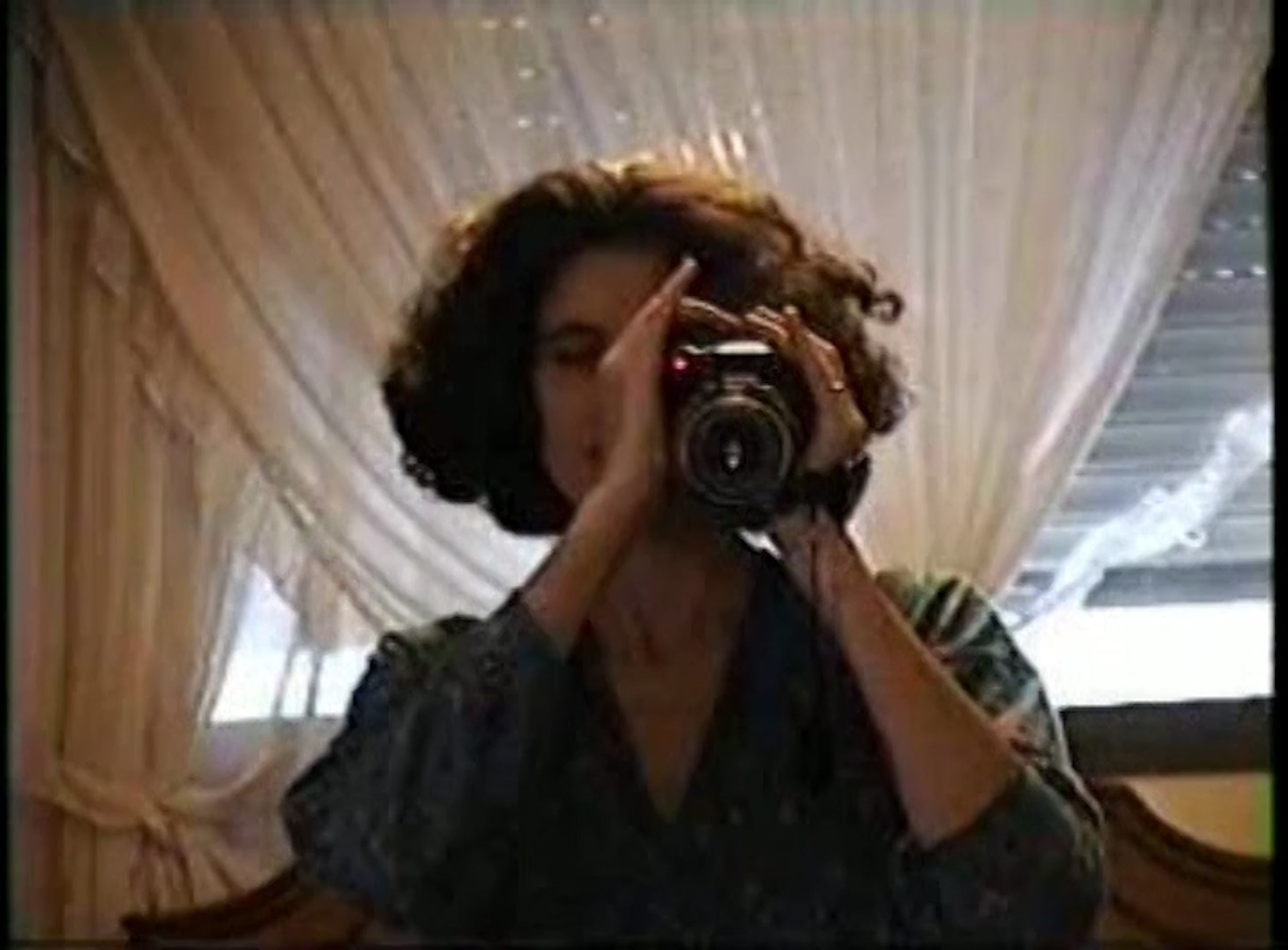
Yousef Srouji’s exceptional film documenting his mother’s video diaries while the Israeli army retaliates against the second intifada in the West Bank will give viewers a scoop into the turbulent life of a Palestinian family thriving for normality in an abnormal world. Their routine involves taking shelter in the basement during air raids as they wait for the thunderous bombing to come to a halt. What stood out for me the most is how the family members coped with the constant bombing surrounding their building. The degree of which they become accustomed to constant shelling and how they cope with it varies greatly from one family member to another. It seems like Suha’s coping mechanism during those unforgiving occurrences was to pull out her video camera and film as much as she can. Yousef, her youngest, appears to succumb to silence, while his sister, Dima, absolutely terrified, often cries herself to sleep.
At times, they even use humour as an antidote to terror. In one particularly humorous scene, Yousef cheekily tries to calm everyone’s nerves, “Mom, sometimes it’s not Arabs shooting, it’s just their farts!” To which Dima adds, “Once we were all asleep, someone let out some sounds, and Yousef said, ‘watch out they might fire back at you!’”. When life gives them a hundred reasons to cry, they still manage to make room for laughter. The smiles in that shelter become psychological symbols of strength and resilience. It’s a beautiful poignant moment laced with warmth and sadness.
The kids go from reading Harry Potter books to debating the size of bullets and the sound of different types of explosives going off a few blocks away. The whining sirens from ambulances, the rattling sound of machine guns from distant combat engagements, and waves of vibration travelling from nearby collapsing buildings are so integrated in the everyday, yet they never quite get used to the horror. I can’t possibly imagine how extremely distressing and mentally exhausting it must be to live under such conditions. Imagine being scared to death, to actually contemplate the possibility of dying, night after night. Usually, these fleeting moments of complete utter terror only last a few seconds, but they feel endless. No human being should endure this type of psychological torture, let alone innocent civilians and children.
“Three Promises” is structured around three episodes of fear-inducing moments. Whenever this feeling of impending doom arises, Suha makes a promise to God. If he gets her family through this safely, she promises to leave the country with her family. The next day, when the dust settles and an air of calm takes over the streets, she renegotiates with God without keeping her end of the deal. Structured around these three promises, I couldn’t help but think of Emad Burnet’s excellent documentary about living under military occupation titled, “5 Broken Cameras”. His film was structured similarly, only instead of promises, it is segmented around the destruction of Burnat’s cameras. Both “Three Promises” and “5 Broken Cameras” would make a fascinating double bill showcasing how Palestinians bookmark their memories around near-death experiences.
Srouji seamlessly weaves together these episodes of fear with sound bites of a present-day conversation between himself and his mother. The reflective exchanges are meant to help them come to terms with the past, unpacking their repressed memories. It is precisely this stylistic choice that elevates his film into something much deeper. “Three Promises” is not just a documentation of a historic incident in the sphere of time, but a study of passed down trauma from one generation to the next. Watching this film in the midst of the humanitarian crisis and the collective punishment of a people in the Gaza strip will elicit an avalanche of emotion from even the most unsusceptible viewers.
The film clocks in sixty-one minutes of duration, and sadly by the time, you’ve finished viewing it, six innocent Palestinian children will have died. “Three Promises” is not simply a highly recommended viewing, it’s an urgent one; especially when it’s not just the mortality of thousands of children that is on line, but the morality of humanity as a whole.
Click here to check out the upcoming screenings for “Three Promises”.
Alex Perry’s independently produced documentary, “Angle”, will go down as one of the most moving wrestling documentaries out there. In fact, it’s right up there with Paul Jay’s “Hitman Hart: Wrestling with Shadows” providing viewers with a fascinating glimpse into the inner-workings of professional wrestling. The film chronicles the turbulent life of professional wrestler and Olympic gold medallist, Kurt Angle. Split into three acts, “Angle” starts off with his ascent in the freestyle wrestling, before switching to his tenures in WWE, and finally ending with the dark days of struggling with an addiction to painkillers. But make no mistake, Angle’s story is filled with perseverance and hope.
The most impressive part of Kurt Angle’s journey is the fact that he managed to win a gold medal in freestyle wrestling with a broken freaking neck. Perhaps it is exactly that kind of persistence and determination that made him triumph over the fiercest opponent of his life, opioids. Perry handles this delicate material with incredible nuance- seamlessly weaving together archival footage with newly shot interviews with various professional wrestlers.
This blend of insightful narration over wrestling footage elevates Angle’s story to the stuff of legend. By exposing untold stories of what was happening behind the scenes of Kurt Angle’s most iconic moments, Perry adds a layer of depth to Angle’s remarkable achievements. I was particularly moved by the wrestler’s loyalty to his teammates after the horrifying incident that unfolded while he was training with Team Foxcatcher.
However, if there is one aspect worth criticizing, it would be the overuse of inspirational music at key moments throughout the documentary. The music felt a bit overwhelming and distracting. That said, it’s a minor mishap in an otherwise impressive work of sports documentary filmmaking. Emotionally engaging and exceptionally gripping, “Angle” will make anyone a fan out of Kurt Angle, one of the most decorated professional wrestlers of our time.
When I first read the tagline of Sofia Alaoui’s “Animalia,” I was intrigued. “A young pregnant woman finds emancipation as aliens land in Morocco.” At best, I expected to watch an alien-invasion science fiction film like M. Night Shyamalan’s “Signs“or Jordan Peele’s “Nope.” To my surprise, I found that “Animalia” has more in common with Terrence Malick’s “The Tree of Life,” Stanley Kubrick’s “2001: A Space Odyssey,” and Denis Villeneuve’s “Arrival.” For a film that tackles such high concepts with a minor budget, “Animalia” is meticulously crafted and beautifully composed.
The film premiered at this year’s Sundance film festival, and was recently acquired for distribution by Egypt’s Film Clinic, as headed by producer Mohamed Hefzy. “Animalia” is expected to screen at more festivals around the world before a wide release.
Astonishingly, this is the French-Moroccan filmmaker’s debut feature film. Her first short film, “So What If the Goats Die,” won the Sundance Film Festival Grand Jury Prize in 2020 before winning a César award for Best Short Film in 2021. Sofia Alaoui describes “Animalia” as “a human odyssey. An ode to nature and the question of the place of the human in this complex world.” The idea came to her when she returned to Morocco after spending years abroad, when Alaoui was confronted with the dogma of religion and humanity’s obsession with money as a means to reach happiness. Coming face to face with an ideology that tries to fit you into a mold would alienate anyone, like an outsider visiting an unrecognizable home from far beyond. To say this film resonated deeply resonated with me on a spiritual level would be an understatement.
We are all born into a society where a set of principles laid down by an authority is blindly and undisputedly taken as fact. Sometimes these principles—legal, religious, or cultural—create social barriers that separate us from one another instead of bringing us closer together. “Animalia” is about the interconnectedness of everything in the universe. It challenges the notion that women should conform to a set of rules in order to fit in or be perceived as good, and it defies the idea that men have a certain role to fulfill to be accepted in society. “Animalia” shows us that no matter how much society categorizes us through social stratification, be it based on wealth, income, sexuality, beliefs, or otherwise, at the end of the day, we are all cut from the same cloth. It subtly builds up to the idea that all living things, human and nonhuman, are connected to the cosmos.
The film is filled with these philosophical musings about time and our place in the universe without ever spoon-feeding us any answers. It merely questions. “Animalia” revolves around Itto (Oumaïma Barid), a pregnant woman who finds herself alone after her husband leaves on a business trip. During his absence, the presence of a supernatural entity or higher being disrupts society as a whole. The whole country descends into chaos. The masses flock toward places of worship, desperately trying to find solace and peace. And as the world is confronted with the reality that we are not alone, Itto embarks on an existential journey that makes her question the indoctrinated narrative surrounding her since birth.
Itto’s surreal journey through the otherworldly landscapes of Morocco is an allegory of our travels through time in search of truth and meaning. Some of the imagery in this film is ethereal and intimidating in the best possible way. It reminded me of the feeling you get when up look at the black emptiness of cosmic space. The more you attempt to grasp its vastness, the more insignificant you realize you are. There is one achingly beautiful sequence in “Animalia” when Itto encounters an extra-terrestrial weather phenomenon. After walking into the celestial storm, she experiences a spiritual rebirth, and her whole belief system collapses. Through this peak into the timeless vistas of the cosmos, Itto learns that the universe is multifaceted and that the physical world is only one part of a bigger whole.
The film delves into our capacity to make meaning from our environment through purposive consciousness and reflective action. The characters in “Animalia” experience a seismic shift in their understanding of being and how human agency has always been intertwined with non-human agency given the ecological forces surrounding us. Cinema rarely delves into the interconnectedness of human and nonhuman beings, but “Animalia”remarkably takes a Daoist approach in positioning humanity as part of the natural world. It utilizes breathtaking aesthetics to give us a better perception of our place within the cosmos. “Animalia” aims for a holistic view of the world, the oneness of all things.
Perhaps what I found most impressive about Sofia Alaoui’s film is that it manages to look outwards and inwards simultaneously. The film captures a balanced connection between outer landscapes, such as the cosmos, and the inner landscapes of human consciousness. Our main character goes through a spiritual transformation as the world around her is changing. The cosmic event surrounding her is merely a reflection of her inner state.
Alaoui uses minimal visual effects, yet the film looks and feels more realistic than most big-budget science fiction films. It also helps how Alaoui uses a documentary style of filmmaking to reinforce her cinematic world. In fact, most of the cast in “Animalia” are non-professional actors; the faces of these non-actors are as significant and memorable as the landscapes in the backdrop within any given scene. Oumaïma Barid and Mehdi Dehbi deliver standout performances as two lost souls who find one another in extraordinary circumstances.
It is so refreshing to see a filmmaker expressing their deepest inner thoughts with such bravery and sensitivity. “Animalia” lingered in my thoughts long after the credits started rolling, and I look forward to revisiting this sci-fi gem time and time again. Alaoui’s film seamlessly blends the real with the surreal, the natural with the supernatural, the material with the spiritual, and the end result is nothing short of transcendental.
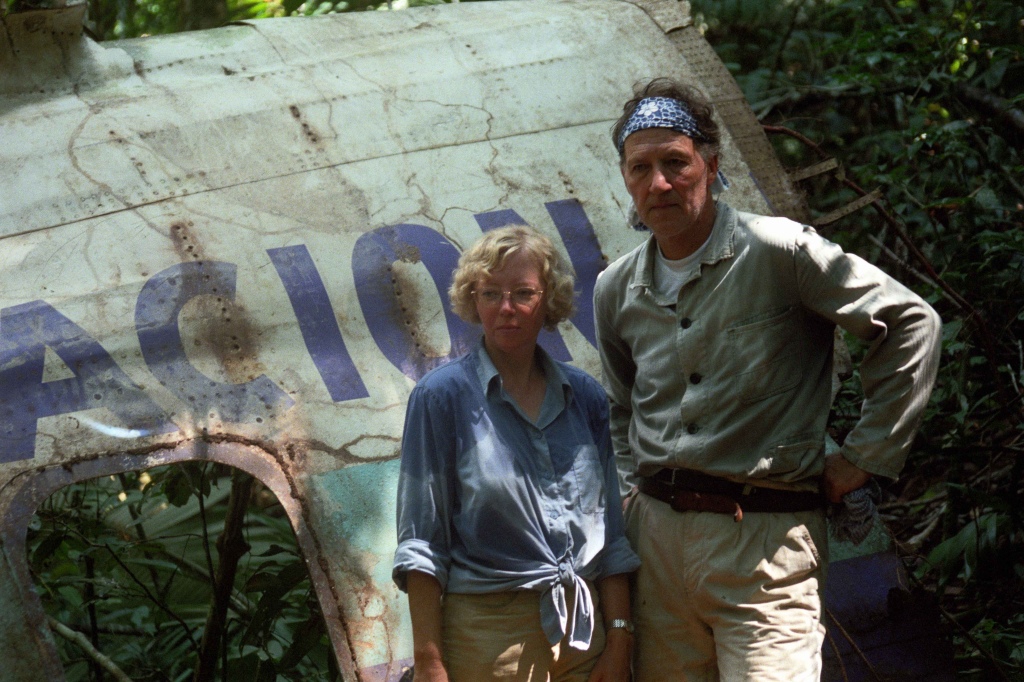
Werner Herzog has one of the most impressive filmographies of documentary filmmaking out there, and although his work as a documentarian covers a huge spectrum of topics, the common denominator always seems to be an existential exploration of humanity and truth. Herzog’s approach rejects the notion that documentaries fall within the sphere of journalism. He does not aspire to simply report facts on an incident or a historical event; instead, Herzog aims for something much more artistic in nature. His documentaries are best described as visual poems.
In “Wings of Hope”, the subject matter tackles one of the most fascinating survival stories in recorded history, the story of Juliane Koepcke. Koepcke was the sole survivor of a Peruvian flight that was struck by lightning. After heavy turbulence, the aircraft plunged into a nose-dive freefall, and her seat was tossed out of the plane before she spiraled through the air. As if surviving a two-mile drop wasn’t enough, the then seventeen-year-old also had to survive eleven days alone in the Amazon rainforest.
Throughout the film, she retraces her steps in the forest and this footage is intercut with recreated sequences representing her nightmares. Herzog’s almost lyrical narration turns an otherwise harrowing tale into a story of hope and beauty. Early in the film, we learn that Herzog was supposed to be on the same flight as Juliane but was denied a seat at the last minute. This remarkable coincidence makes the connection between the filmmaker and his subject all the more complex, for they were not brought together through interest, but rather fate.
After three seminary students get lost and wander into the countryside, they spot a farmhouse in the middle of nowhere. They foolishly demand to spend the night there not knowing that it is home to a wicked witch. The old lady agrees to let them in under one condition, they all must sleep at separate places within the farm. Late into the night, our protagonist, Khoma Brutus, is visited by the old lady as she tries to seduce him. “Not for all the gold in the world would I let you tempt me.”
The witch casts a diabolic spell on him and starts to ride him like a horse before they take off into flight. When he realizes the disturbing nature of their behavior, he attempts to beat her to death before she turns into a young woman, and he flees in fright. Years later, the young man is summoned to spend three nights with the deceased witch who he met years ago. He is asked to pray for her, and if he manages to survive three long nights alone with her body, he’ll be gifted the one thing he said he would never accept from her- gold.
Konstantin Yershov and Georgi Kropachyov’s “Viy” is the first horror film made in the Soviet Union. The surreal Ukrainian folk horror was based on a short story by the famous Nikolai Gogol. I was pleasantly surprised by how much I enjoyed watching this mischievous piece of cinema. Much credit should be given to the great Aleksandr Ptushko whose playful special effects take center stage. The last thirty minutes in particular is a sight to behold. The filmmakers use every trick in the book to flood the screen with ghoulishly grotesque imagery. I couldn’t help but smile all the way through. “Viy” is disturbing, absurd, bizarre, and outlandish at the same time. A real treat for anyone who wants to take a deep dive into a world of phantasmagoria.









 The Cinephile Fix